
Was Yeonsangun real? The king behind Bon Appétit, Your Majesty
The drama's king is made up, but the man behind him is not: Yeonsangun, whose records even show his table.

01A chef, a king and a simple question
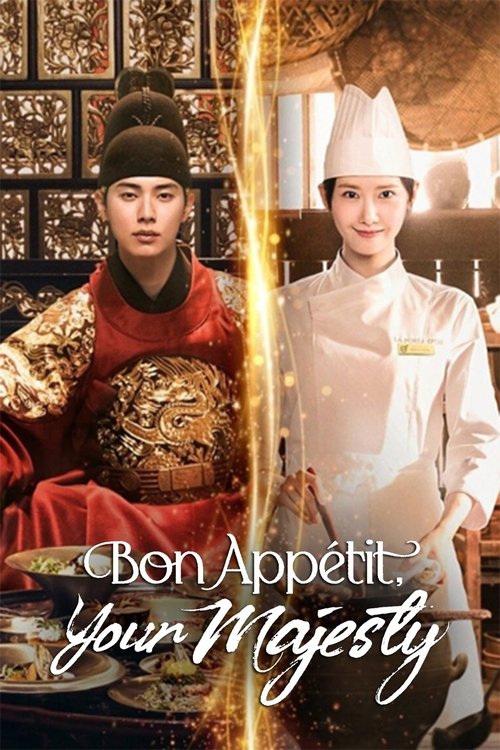
Bon Appétit, Your Majesty begins with a modern chef thrown back in time into a palace, where her job is to keep a king happy. Lim Yoon-a plays the chef, Yeon Ji-yeong, and Lee Chae-min plays the king, Lee Heon. It aired on tvN and Netflix, twelve episodes, from August 23 to September 28, 2025.
The question is simple: was that king real? The answer has two parts. Lee Heon is made up. The man behind him is not.
The idea comes from a web novel by Park Kook-jae, and its title says it all: Surviving as Yeonsangun's Chef. The real king's name sits right there on the cover. In the drama, the king became Lee Heon instead. One writer noted that by dropping the name, the drama also leaves behind the weight of the official records. That weight is where the real story lives.
02A boy who lost his mother at two
Yeonsangun was born in December 1476, the son of King Seongjong and his queen, Yun. In 1479, when he was two years old, his mother was thrown out of the palace, and the reason given was that she had struck the king one night. In 1482 she was ordered to drink poison.
The boy was raised believing that another queen, Jeonghyeon, was his mother. At eighteen, he was king. When he found out what had happened to her is not settled, because historians give different years for that. Either way, a queen was cast out and killed, and her son grew up to wear the crown. That is where the trouble starts.
03Two purges and a banned alphabet
In 1498, a scholar's draft for the royal records included a line that criticized King Sejo's seizure of the throne, back in 1455. That single passage set off the first purge, and many scholar-officials were put to death.
Six years later came the Gapja purge of 1504, which went after the people tied to his mother's death. Lady Jeong and Lady Eom were beaten to death for their part in it. Even Queen Insu, who had ordered his mother into exile, died soon after he pushed her. The novel behind the drama draws on this very purge.
That same summer, in July 1504, anonymous letters written in Hangul turned up, and the king was furious. His answer was to ban Hangul: learning it, teaching it, even using it. Anyone caught using it faced beheading, and anyone who failed to report it faced a beating. Within weeks the ban faded, and the writer of those letters was never caught. A few letters, and a king bans an entire alphabet.
Fear like that doesn't stay in one room.
04A whole kingdom cooking for one king
This is where the drama's kitchen meets the records. In 1497, the king told provincial governors to keep sending deer tails and tongues to the palace. In 1504 came another order: tribute goods must be sealed and sent at once, so nothing would spoil. The royal kitchen office, the Saongwon, would check their taste and color.
The rules were harsh. Officials who sent anything below standard would be questioned, and an official questioned three times in six months would lose his post. In the drama, one chef has to win over one king's taste. In the records, a whole kingdom is doing it, province by province.
His appetite for pleasure did not stop at food. The Annals describe a banquet at the Gyeonghoeru pavilion in 1506, with more than three thousand court entertainers, known as heungcheong and unpyeong. Ordinary people resented it, and a phrase was born: heungcheong-mangcheong. Koreans still use that phrase today, as a warning against reckless excess.
05The fall, the island and a last wish
That banquet fell in the last year of his reign. Months later, in September, a coup came for him. Three men led it: Pak Won-jong, Seong Hui-an and Yu Sun-jeong. They put his half brother on the throne, as King Jungjong. Yeonsangun lost his title as king, and he was sent to Gyodong, an island off the coast. About two months later, he was dead.
The new king's records note a report from the island: at the end he said nothing else, only that he wanted to see Lady Shin, the queen who had lost her title along with him. The last thing the tyrant asked for was not a feast.
The boy who lost his mother at two had one name on his lips at the end.
His tomb and Lady Shin's are in Seoul, side by side. He never received a temple name, the name given to a proper king, so he is still known as a prince, Yeonsan-gun. Even his records carry a lesser name: an ilgi, a daily record, and not a sillok, the annals a king normally gets.
06The records, read carefully
So Lee Heon wasn't real, but the king behind him was, and the records even show his table. One honest note belongs here too: his records were compiled after his fall, under the court that replaced him. The darkest stories should be read carefully. What a viewer can hope for is a retelling that keeps real history and invention clearly apart.
Pictures: TMDB (portraits and stills) and OnamiDramas video artwork. This product uses the TMDB API but is not endorsed or certified by TMDB.
The people
The dramas
More stories

Netflix Confirms Tokyo Swindlers Season 2 With Go Ayano and Etsushi Toyokawa Returning
Netflix has started production on a new season of its Japanese crime thriller Tokyo Swindlers, with Go Ayano, Etsushi Toyokawa and director Hitoshi One back on board.

Tencent Video Shares New Trailer for The Noble With Chen Xingxu and Li Yitong
Tencent Video has released a new trailer for The Noble, a costume drama about a maid born into servitude who sets out to rewrite…

Sacred Jewel Will Stream on Coupang Play From December 5, New Teaser Shows
Coupang Play's new teaser confirms the Goryeo-era epic Sacred Jewel, starring Ahn Bo-hyun, Lee Sung-min and Claudia Kim, will…